
Why Is the Butter Squishy So Popular? Appeal, Search Trends and Buying Choices
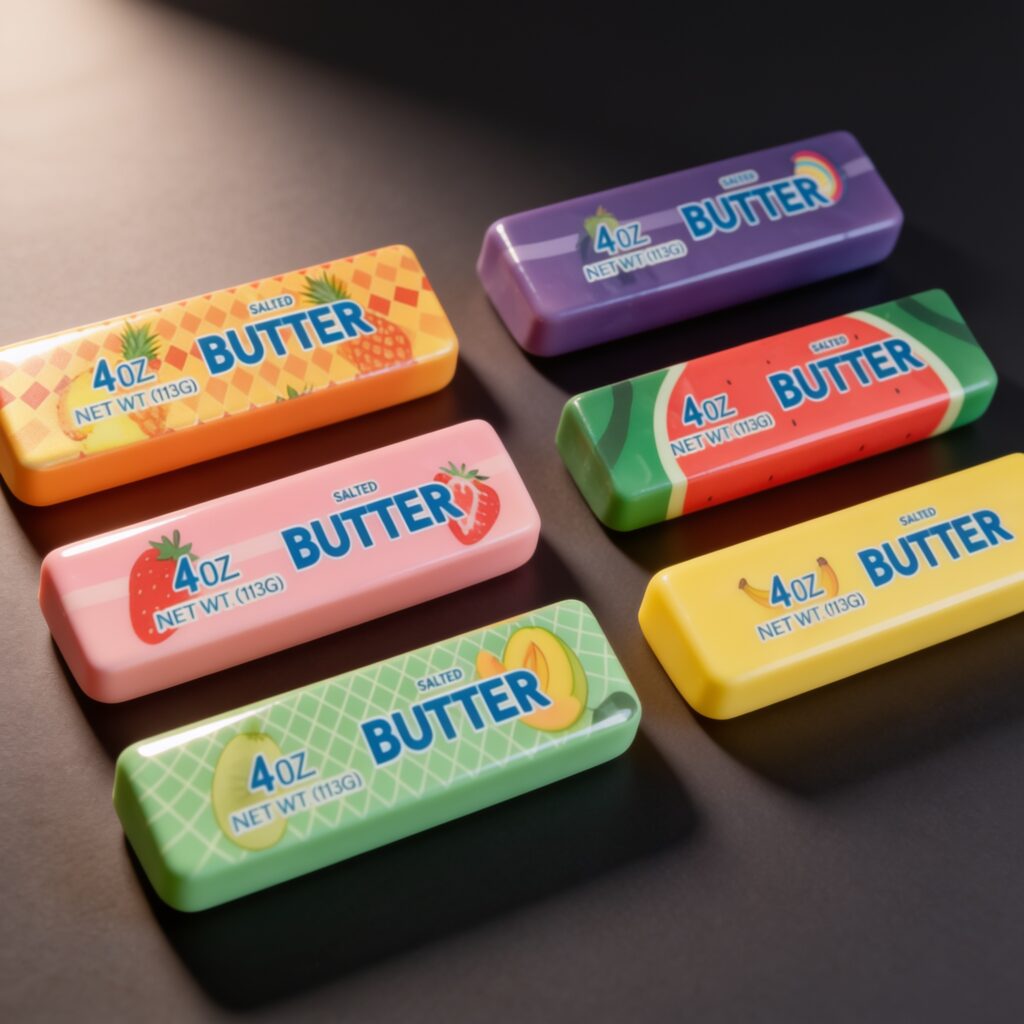
A butter squishy combines a familiar food shape with a slow squeeze-and-release motion. The wrapper details make it easy to recognize; the change in shape gives a short video something to show. Those are plausible reasons for its appeal, rather than proof of how many people own one or which brand started the trend.
This guide separates what you can see in the product from what search data can tell you. It is written by Butter Squishy, a retailer in this category. We do not claim to have invented the format.
- What Can Search Interest Tell Us?
- Why Does the Format Work in Short Videos?
- Is the Trend Fading or Holding Steady?
- How Should You Compare Toy Trends?
- Does Search Interest Prove Store Availability?
- Will It Last Into the Holidays?
- What Matters If You Want to Buy One?
What Can Search Interest Tell Us?
Google Trends shows relative search interest, not sales or the number of people who bought a toy. Its values are normalized for the place and time period selected, then scaled from 0 to 100. A value of 100 is the high point within that comparison; it is not a market-share percentage. A displayed zero can mean that search volume is too low to report.
That matters when a small term becomes more visible. You cannot take a displayed zero as a reliable baseline and calculate a claim such as “50 times more popular.” Nor can two charts with separate scales be compared as though their numbers were raw search counts. Google explains how Trends data is normalized and filtered.
For a reproducible comparison, record the exact search terms or topics, country, dates and search type. Compare terms on the same chart, save the export, and state when it was collected. A changing chart is useful for investigation; it should not be presented as a permanent fact about the size of this market.
Why Does the Format Work in Short Videos?
The visual idea takes little explanation: a block that looks like butter flattens in someone’s hand and changes shape when released. Printed seams, colors and a crackled finish provide close-up detail. A larger stick fills more of the frame, while a smaller one is easy to hold in one hand.
This is our interpretation of the format’s appeal, not a measured claim about TikTok’s recommendation system or the first creator to film it. A clip also cannot tell you everything about the item being sold: speed, edits and a close camera can change how size and movement look. Check a listing’s material and dimensions alongside the video.
Is the Trend Fading or Holding Steady?
A lower search index after a peak can describe less relative interest over the selected period. It does not, by itself, prove that a toy has disappeared or settled into a lasting category. Search, stock, orders and customer interest answer different questions.
For a buyer, the more useful question is whether the design and feel suit you after the novelty wears off. Look for a size you can comfortably keep where you will use it, and choose between slow-rise foam and a moldable gel rather than assuming every butter-shaped toy behaves alike.
How Should You Compare Toy Trends?
A brand name, a broad phrase such as “fidget toys” and a specific phrase such as “butter squishy” describe different things. Their search interest can be compared with a consistent method, but that does not establish sales, market share or who originated the design. We do not rank these categories by sales in this guide.
Compare the physical products instead when deciding what to buy: material, dimensions, price, the number of pieces included and the seller’s return terms. Similar names and photos can cover different textures or construction.
Does Search Interest Prove Store Availability?
No. A retailer’s name appearing in a related search means people searched for it. It does not confirm that the retailer stocks a specific toy, sells it directly or has it in a nearby store. Check an exact listing and its seller, then check local pickup or delivery availability separately.
Our buying guide explains those checks without treating an online listing as proof of a physical shelf location.
Will It Last Into the Holidays?
Future demand is uncertain. A seasonal pattern for a broader toy category is not a guarantee for a particular design or seller. If you are buying a gift, make the decision around the recipient and the delivery window, not a prediction that the trend will keep growing.
For orders from our shop, the estimated total is 7-10 business days: 2-3 business days to dispatch, then 5-7 business days in transit. Holiday and carrier delays can add time. See our Shipping Policy before choosing an arrival date.
What Matters If You Want to Buy One?
Start with the material and size. Our Classic 4oz is a slow-rise PU foam stick; the Translucent is a moldable gel. They share a butter shape, but the movement is different. Our size guide compares the formats we actually list.
These are food-shaped toys, not food or medical products. Our shop recommends them for ages 14 and up. Read the product details and Safety Information, and keep them away from young children and pets.